Sonalika GT 20 vs Captain 200 DI LS
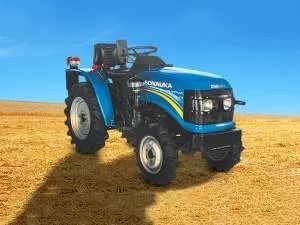
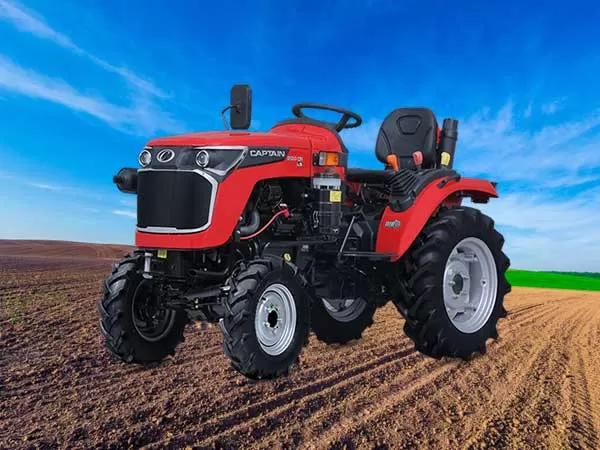
Comparing the Sonalika GT 20 and the Captain 200 DI LS — both sit at the same engine rating, and the Captain 200 DI LS is about ₹0.56 lakh cheaper ex-showroom. The specifications below are from the manufacturers; the section under them explains what those differences mean on an actual farm.
Which one should you buy?
Both of these are sold into the same segment, so the choice comes down to a handful of real differences rather than one being better than the other outright.
Price
The Captain 200 DI LS is roughly ₹0.56 lakh cheaper ex-showroom — about 15% less than the Sonalika GT 20. On road that gap widens slightly, because RTO tax and insurance are calculated on the higher figure. Whether the Sonalika GT 20 earns that back depends entirely on the points below; if it does not, the cheaper machine is the better buy.
Lifting capacity
The Captain 200 DI LS lifts 100 kg more (Sonalika GT 20: 650 Kg, Captain 200 DI LS: 750 kg). This decides which mounted implements the tractor can actually carry, and it is where cheaper models usually cut corners. Check it against the heaviest implement you own — loaded weight, not the dry weight in the brochure.
2WD or 4WD
This is the biggest practical split between the two. The Sonalika GT 20 is four-wheel drive; the Captain 200 DI LS is two-wheel drive. If you puddle paddy every season or work on slopes, 4WD is close to essential and worth the extra cost and fuel. On level, dry land doing mostly haulage, it is money spent for little return — take the Captain 200 DI LS.
Engine
The Sonalika GT 20 runs 3 cylinders against the Captain 200 DI LS's 1. More cylinders generally means smoother running and less vibration over a long day, at the cost of a little more fuel and slightly dearer servicing. Fewer cylinders is simpler to maintain, which matters if your nearest workshop is far.
Gearbox
Sonalika GT 20: 6 Forward +2 Reverse. Captain 200 DI LS: 9 Forward + 3 Reverse (HML). Count the low-range speeds rather than the total — puddling and rotavating need slow ground speed at working engine revs, and a box with too few low gears forces a compromise between the two.
Other differences
They also differ on brakes (Mechanical vs Oil Immersed Brake), steering (Mechanical/Worm and screw type ,with single drop arm vs Manual Single Drop Arm). None of these decide the purchase on their own, but oil-immersed brakes and power steering are worth paying for if you spend long days on the machine.
The short answer
Taken together the Captain 200 DI LS leads on more of the dimensions that affect day-to-day work. It is the safer pick unless the Sonalika GT 20 is meaningfully cheaper for you after the dealer quote.
- Wet fields, puddling or slopes: the Sonalika GT 20, because it is four-wheel drive. On dry level land the Captain 200 DI LS does the same work for less.
- Heavy mounted implements: the Captain 200 DI LS, which has the hydraulics to carry them.
- Tightest budget, or if none of the above apply to you: the Captain 200 DI LS. Paying for capability you never use is the most common and most expensive mistake at this size.
Before you decide
- Prices here are ex-showroom. Add roughly 7–10% for RTO registration and insurance, and get the on-road figure in writing from the dealer, itemised.
- Visit more than one dealer for each brand. Exchange value and finance terms vary between showrooms by more than the price gap between these two machines.
- Ask how far the nearest workshop is for each brand. A tractor that is down for a week in season costs more than the difference between these two.
- Drive both with an implement attached, not empty. An unloaded tractor tells you very little.
Specifications compared
| Specification | Sonalika GT 20 | Captain 200 DI LS |
|---|---|---|
| Ex-showroom price | ₹3.74 - ₹4.09 Lakh* | ₹3.18 - ₹3.58 Lakh* |
| Engine | ||
| HP | 20 HP | 20 HP |
| Cylinders | 3 | 1 |
| Displacement (CC) | 959 CC | 947.4 CC |
| Engine RPM | 2700 RPM | 2200 RPM |
| Air Filter | Oil Bath With Pre Cleaner | — |
| Battery | 12 V 50 AH | — |
| Cooling System | — | Water Cooled |
| Transmission | ||
| Transmission Type | Sliding Mesh | Sliding Mesh |
| Clutch | Single clutch | NA |
| Gearbox | 6 Forward +2 Reverse | 9 Forward + 3 Reverse (HML) |
| Forward Speed | 23.9 kmph | 25.68 kmph |
| Reverse Speed | 12.92 kmph | — |
| Brakes | ||
| Brake Type | Mechanical | Oil Immersed Brake |
| PTO | ||
| PTO Type | Multi Speed PTO | — |
| PTO RPM | 575 /848/ 1463 | 611 & 787 @2200 |
| PTO Power (HP) | 10.3 HP | NA |
| Hydraulics | ||
| Lifting Capacity (Kg) | 650 Kg | 750 kg |
| 3 Point Linkage | ADDC | ADDC |
| Steering | ||
| Steering Type | Mechanical/Worm and screw type ,with single drop arm | Manual Single Drop Arm |
| Steering Column | Worm and screw type ,with single drop arm | — |
| Dimensions & Weight | ||
| Total Weight (Kg) | 820 KG | 830 KG |
| Wheelbase (MM) | 1420 MM | 1490 MM |
| Overall Length (MM) | 2580 MM | 2665 MM |
| Overall Width (MM) | 1110 MM | 1030 MM |
| Ground Clearance (MM) | 200 MM | — |
| Fuel Tank Capacity (L) | 31.5 litre | 20 litre |
| Wheels & Tyres | ||
| Wheel Drive | 4 WD | 2 WD |
| Front Tyre | 5.00 X 12 | 5.00 X 12 |
| Rear Tyre | 8.00 X 18 | 8.00 X 18 |
| Other | ||
| Warranty | 2000 Hours Or 2 Year | NA |
| Accessories | TOOL, TOPLINK, CANOPY, HOOK, BUMPER, DRARBAR | — |
Related comparisons
- Sonalika GT 20 vs Powertrac Steeltrac 15
- Powertrac Steeltrac 15 vs Captain 200 DI LS
- Sonalika GT 20 vs Mahindra Yuvraj 215 NXT
- Mahindra Yuvraj 215 NXT vs Captain 200 DI LS
- Sonalika GT 20 vs Farmtrac Steeltrac 18
- Farmtrac Steeltrac 18 vs Captain 200 DI LS
- Sonalika GT 20 vs Powertrac Steeltrac 18
- Powertrac Steeltrac 18 vs Captain 200 DI LS
Compare other models
Build your own side-by-side comparison of any two tractors in the catalogue.
Open the comparison tool