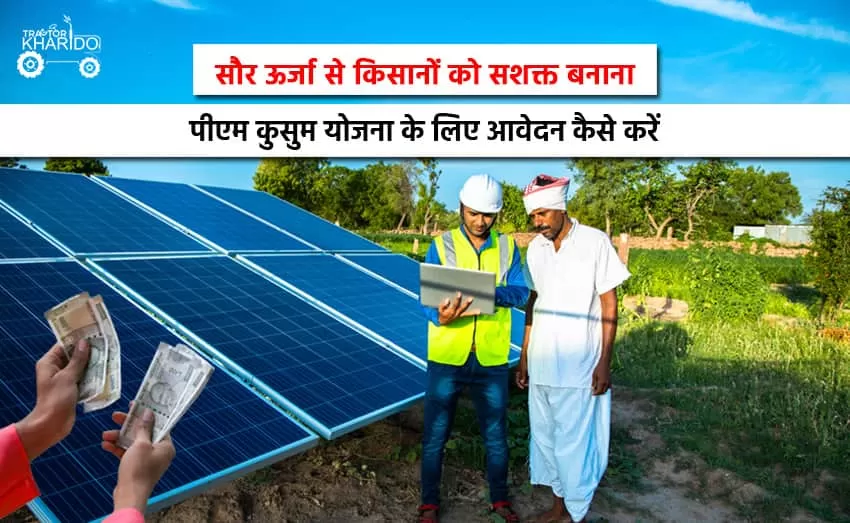
PM Kusum Yojana: Empowering Farmers with Solar Energy
The Indian economy has never been without agriculture, and millions of farmers take part in food production. On the same note, however, farming does have its problems together with opportunities. Among the most worrying issues that farmers face is the increasing amount of money they have to spend on irrigation because they have started using power and diesel pumps. In order to overcome this problem, a special scheme branded the PM Kusum Yojana was initiated by the government of India.
This program, unofficially referred to as Pradhan Mantri Kisan Urja Suraksha evam Utthaan Mahabhiyan (PM-KUSUM), seeks to alter the irrigation method used by farmers by advancing solar power. Farmers receive funds to receive financial assistance to install solar panels, solar pumps, and other renewable energy technologies represented through this programme. This does not only save on their irrigation but also makes their energy costs more secure.
Here in this blog, we will explore PM Kusum Yojana, its advantages, aspects, eligibility, how to apply, and what the future of it is under PM Kusum Yojana 2025.
What is PM Kusum Yojana?
In 2019 the Ministry of New and Renewable Energy (MNRE) initiated the PM Kusum Yojana. The concept of the scheme is to supply farmers with clean, stable and cheap energy. It enables farmers to substitute their old, electricity- or diesel-powered pump with the PM Kusum Yojana Solar Pump for Farmers that uses solar power.
In that way, farmers will be able to lessen their reliance on fossil fuels, decrease the irrigation expenses, and even receive extra money by selling supplementary solar power to the power grid. So as to keep the scheme affordable to the small and marginal farmers, the government provides subsidies.
Key Objectives of PM Kusum Yojana
The scheme was designed with specific goals to improve the lives of farmers and promote renewable energy. Here are the main objectives:
- To promote the use of solar energy in agriculture.
- To reduce the use of diesel pumps and lower pollution.
- To provide financial relief to farmers by reducing irrigation costs.
- To increase farmers’ income by allowing them to sell surplus electricity to the grid.
- To move India towards a sustainable and eco-friendly future.
Components of PM Kusum Yojana
The PM Kusum scheme is divided into three main components:
1. Component A – Solar Power Plants
Farmers, cooperatives, or panchayats can set up decentralised solar power plants on barren land. The energy generated can be supplied directly to the local grid. This provides farmers with an additional source of income.
2. Component B – Standalone Solar Pumps
This part of the scheme allows farmers to replace diesel-based pumps with solar-powered pumps. These pumps are not connected to the grid and are useful in remote areas where electricity supply is limited.
3. Component C – Solarisation of Existing Pumps
Under this component, farmers who already have electric pumps can connect them with solar panels. This reduces dependency on electricity and ensures uninterrupted irrigation.
Benefits of PM Kusum Yojana
The PM Kusum Yojana Solar Pump for Farmers comes with a wide range of benefits:
- Lower Irrigation Costs – Solar pumps reduce the need for expensive diesel and electricity.
- Extra Income – Farmers can sell the surplus energy generated by their solar panels to the grid.
- Eco-Friendly Farming – Promotes the use of clean and green energy.
- Government Subsidy – Farmers only pay a small share of the total cost; the rest is covered by the government.
- Reliable Power Supply – Solar pumps work even in areas where electricity is irregular.
- Employment Opportunities – Installation and maintenance of solar systems create rural jobs.
Subsidy Details
This scheme is made successful by means of the extensive financial assistance that the government offers. The cost should be shouldered by farmers at only approximately 10 per cent, with 30 per cent being contributed by the state government and 30 per cent by the central government. The rest, 30 per cent, can be funded by loans.
The reason is that this type of cost-sharing guarantees that the programme is accessed by even the small and marginal farmers without incurring a financial hit.
Eligibility for PM Kusum Yojana
To benefit from PM Kusum Yojana 2025, farmers must meet certain eligibility criteria:
- The applicant must be an Indian farmer (individual or group).
- Cooperative societies, panchayats, or Farmer Producer Organisations (FPOs) can also apply.
- The applicant must have land suitable for installing solar panels or pumps.
- Small and marginal farmers are given preference.
How to Apply for PM Kusum Yojana?
The application process for PM Kusum is simple and mostly online:
1. Visit the official website of the Ministry of New and Renewable Energy or the state government’s renewable energy department. www.rajkisan.rajasthan.gov.in
2. Register by filling out the PM Kusum Yojana application form with personal and land details.
3. Upload the necessary documents, such as the Aadhaar card, land ownership papers, and bank details.
4. Select the component (A, B, or C) under which you want to apply.
5. Once verified, the authorities will approve your application, and you will receive instructions for installation.
Farmers can also seek help from nearby renewable energy agencies or state electricity boards.
Documents Required
Here are the common documents needed for the application:
- Aadhaar card
- Proof of land ownership
- Bank account details
- Passport-size photographs
- Mobile number for communication
PM Kusum Yojana 2025 – Future Plans
The government has ambitious goals under PM Kusum Yojana 2025. The plan is to install around 30.8 GW of solar capacity through decentralised projects. Millions of farmers will be provided with solar pumps and grid-connected solar systems.
By 2025, the scheme aims to:
- Reduce the use of nearly 35 million litres of diesel annually.
- Provide solar irrigation to over 2 million farmers.
- Encourage farmers to earn a steady income from solar energy production.
- Contribute significantly towards India’s renewable energy target of 450 GW by 2030.
Challenges in Implementation
While the scheme is promising, some challenges still exist:
- High upfront costs for farmers even after subsidies.
- Lack of awareness in rural areas about the benefits.
- Technical issues in maintaining solar panels and pumps.
- Delays in subsidy distribution in some states.
The government is working to overcome these challenges by simplifying processes, increasing awareness campaigns, and collaborating with private companies.
Why PM Kusum Yojana is a Game-Changer
PM Kusum Scheme is not a mere subsidy programme. It is one way of empowering farmers and putting the agricultural sector in a sustainable position. As farms turn to solar, the farmer saves money, carbon emissions are reduced, thereby bringing benefits to the environment, and India becomes a country to become an energy-secure nation.
This scheme to the farmers implies freedom from escalating costs of fuel and lack of continuous power supply. To the country, this is a step towards clean energy.
Conclusion
This is a farsighted idea on the part of the Indian government, as the PM Kusum Yojana integrates renewable energy sources with agriculture. Not only does it enable farmers to cut down their expenses in irrigation, but it also provides farmers with fresh opportunities for earning. The reach of this scheme is going to be increased with the introduction of PM Kusum Yojana 2025, and this will help millions of farmers around India.
By either installing PM Kusum Yojana Solar Pumps for the farmers or by installing the solar power plants on the barren land, the scheme can transform Indian agriculture. The vision of farming becoming self-sufficient, energy independent, and sustainable can become a reality as more farmers find solar solutions and become more aware.